What brainwaves are
Brain cells communicate with electrical signals. When large groups fire in rhythm, the combined activity can be measured on the scalp with an EEG as waves of different speeds, measured in hertz (cycles per second). Researchers group them into bands:
| Band | Frequency | Commonly associated with |
|---|---|---|
| Delta | 0.5–4 Hz | Deep sleep |
| Theta | 4–8 Hz | Drowsiness, light sleep, deep relaxation |
| Alpha | 8–12 Hz | Calm, relaxed wakefulness, eyes closed |
| Beta | 13–30 Hz | Active thinking, alertness, focus |
| Gamma | Above 30 Hz | Complex information processing |
These associations are broad tendencies, not switches. Your brain produces a mix of bands at any moment.
What brainwave entrainment is
Brainwave entrainment is the idea that a steady external rhythm, such as a pulsing sound, can encourage brain activity to fall into step with it. Two common audio methods are:
- Binaural beats: each ear hears a slightly different tone (for example 200 Hz and 210 Hz), and the brain perceives a "beat" at the difference, here 10 Hz. Headphones are required.
- Isochronic tones: a single tone switched on and off at a steady rate.
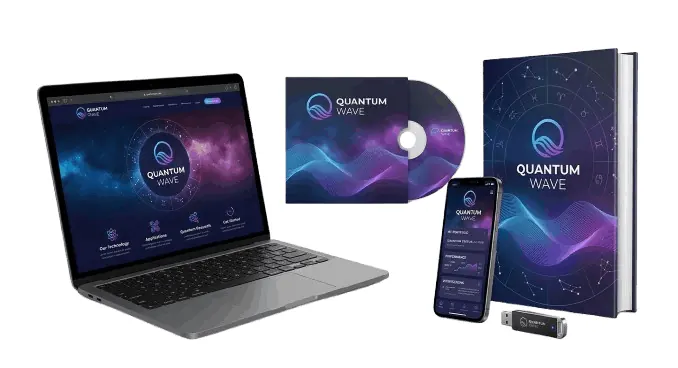
The official Quantum Wave page describes its track as brainwave entrainment aimed at states associated with relaxation and mental clarity, but it doesn't say which method it uses. Because it asks for headphones, binaural beats are plausible, but that's our inference, not a stated fact.
What the research shows
Some measurable effects on how people feel
A 2019 meta-analysis in Psychological Research by Garcia-Argibay, Santed and Reales pooled studies on binaural beats and reported small-to-moderate effects on self-reported anxiety, pain perception and some attention and memory tasks. The authors noted large differences between studies in how beats were delivered.
Inconsistent evidence of actual entrainment
A 2023 systematic review in PLOS ONE by Ingendoh, Posny and Heine looked specifically at whether binaural beats change brainwave activity on EEG. Results were contradictory: some studies found the expected changes, others found none or the opposite. The authors called for better-designed studies.
What that means for Quantum Wave
No study has tested the Quantum Wave track itself. The research suggests relaxation audio may help some people feel calmer, likely through a mix of the sound, the quiet time and the routine, while others notice little. That matches the seller's own statement that results vary greatly.
Where microtubules and "quantum" come in
Quantum Wave's marketing links the program to research on microtubules and to Sir Roger Penrose's theory that quantum processes in these structures may play a role in consciousness. That theory is debated and unproven, and nothing shows that listening to audio changes microtubules. We cover it in depth in the quantum antenna idea behind Quantum Wave.

How to listen safely
- Only listen when you can fully relax: never while driving, cycling or operating machinery.
- Keep volume moderate. Long listening at high volume can damage hearing.
- If you have epilepsy, a seizure history, a heart condition, are pregnant, or have a mental health condition, ask your doctor first.
- Stop if you feel dizzy, anxious or unwell, and seek medical advice if symptoms continue.
- Don't replace any prescribed treatment or therapy with audio programs.
Realistic expectations
Think of Quantum Wave as a structured daily pause: seven minutes of quiet listening with a journal to track how you feel. Some people find that valuable. It is not a way to change luck, income or health outcomes, and the seller doesn't promise that it is. If you'd like to try it, the current price and guarantee are the next thing to check.

See the current Quantum Wave offer
Quantum Wave is $47 one-time on the official page, with three bonuses and a 90-day money-back guarantee.
Check the price on the official site- One-time $47, no subscription
- 90-day money-back guarantee
- Instant digital access
- Secure ClickBank checkout